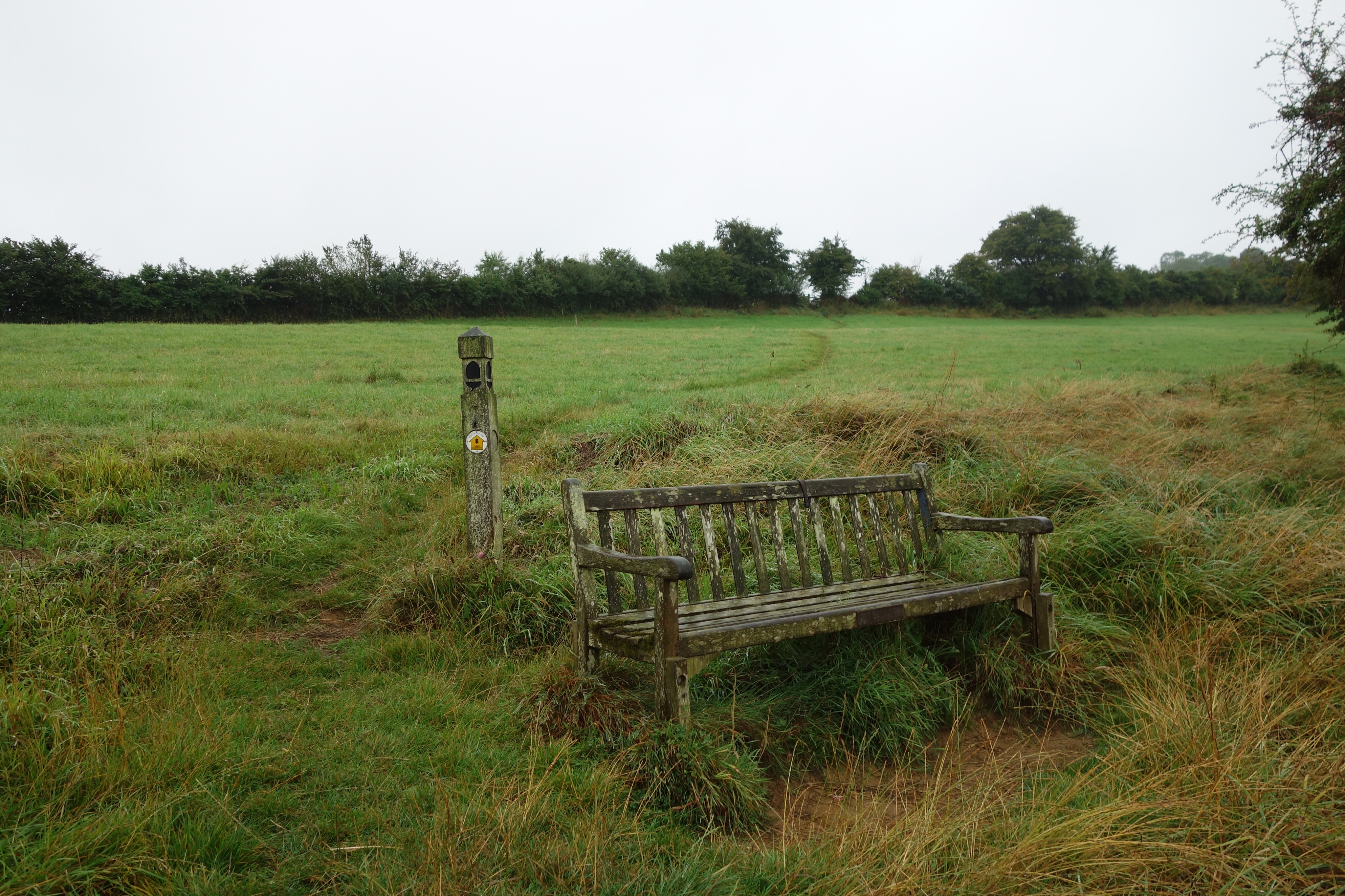
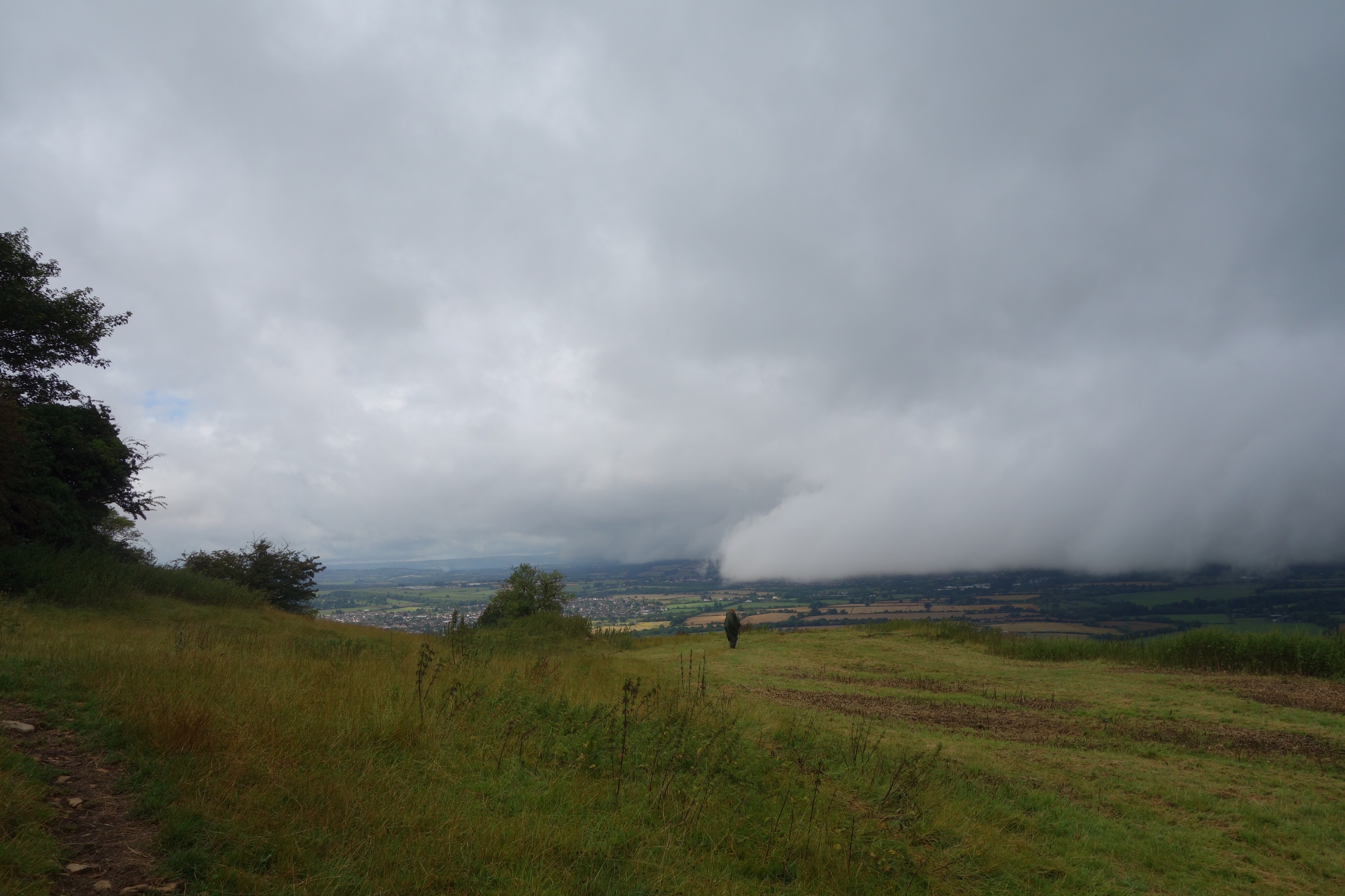
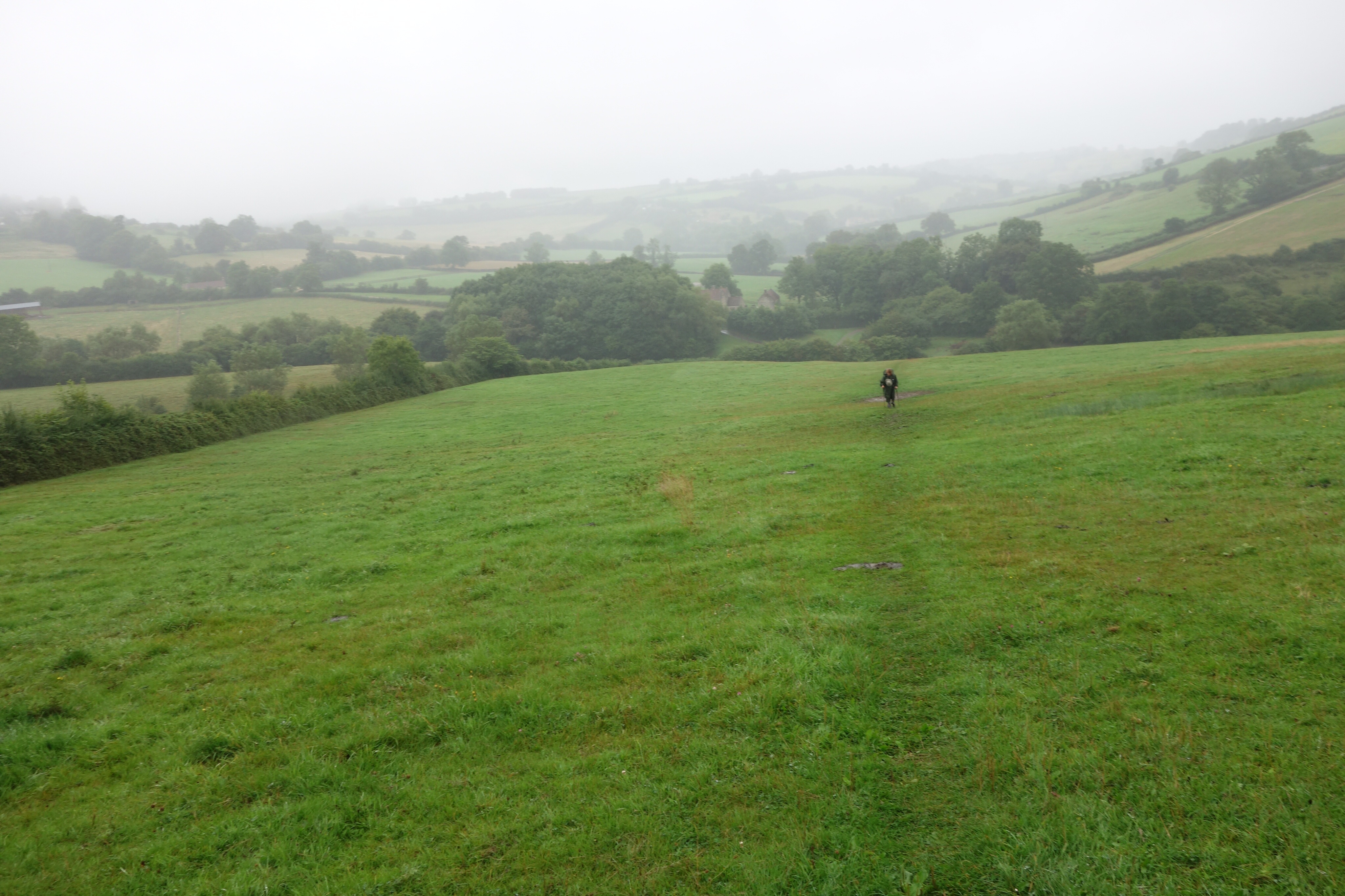
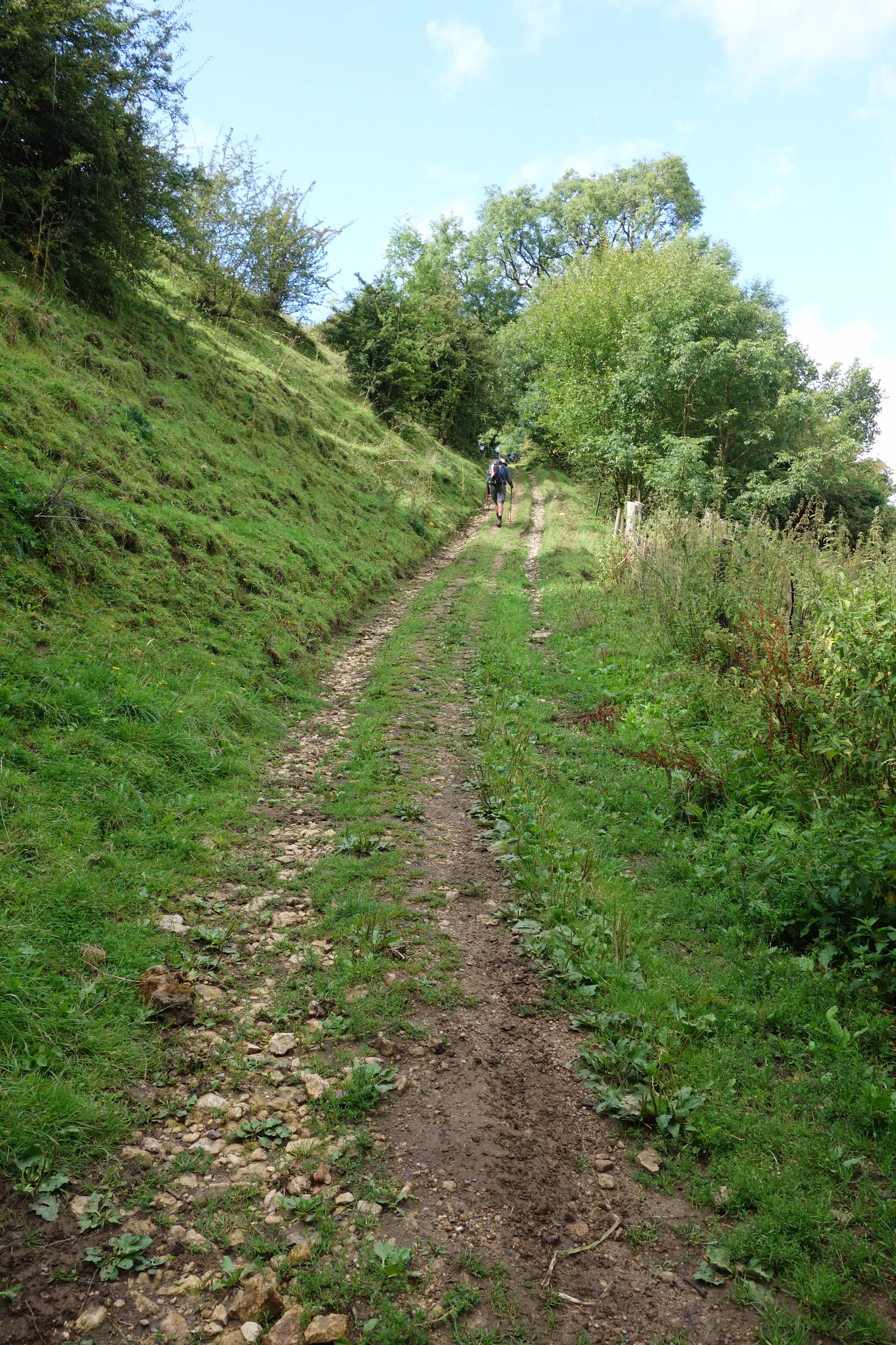
When we got back from England, I couldn’t bring myself to go for a walk. After tramping across fields and pastures and through beech forests, I couldn’t reconcile myself to walking on the paved paths around our artificial lake or along a grid road across the flat prairie. To make things worse, some of the park’s little gravel paths have been paved over since we went on our vacation. Asphalt, it seems, is considered an improvement by the Wascana Centre Authority. I disagree. Don’t get me wrong: this city has many good points, but it’s not the best place to go for a walk.


I had to get out of my funk, so on Wednesday I got Christine to drop me off at the farthest point in the city’s northeast I could think of: in front of the Correctional Centre. (It’s adjacent to the landfill; don’t ever think that city planners lack a sense of irony.) From there I walked to the city’s southwest, a shopping development named “Grasslands,” where I would call to get a lift home from a bar named after both a CFL football legend and a bomber from the Second World War. Whatever else happened on my walk, I was going to get a glass of draft beer at the end of it.

Nothing much happened on my walk across town, to be honest. I passed maybe 10 other walkers in total, and most of them looked like they were too young to have a driver’s license. A couple of them smiled at me; another frowned. Cars and trucks passed me by. I walked through the big-box developments in the city’s east end, along the lake past the university, through a couple of suburban neighbourhoods, and then to my destination. It only took a little over three hours, and when I mapped out my route later, I discovered that it was just 17 kilometres long.


For most of my route, I walked along sidewalks, but for the first hour or so, there weren’t any. I think I read something about Brasilia once, mocking that city’s designer for leaving sidewalks out of the plan, as if no one was ever going to need to walk there. Maybe North Americans shouldn’t be so smug, since our suburbs are designed without sidewalks, too. Very few people walk there, of course, some do–enough that the paths left by their feet are sometimes visible.

I thought about Richard Long as I walked. I’d just started to read a book about his work, and in particular the piece that made his name, called “A Line Made By Walking.” Long just walked across a pasture until the path his feet made was visible, then took a picture. The piece, according to the book’s author, Dieter Roelstraete, “belongs to the histories of early Conceptual art, Land art . . . performance or body art, Arte Povera . . . conceptually inflected experimentation in photography” and, most of all, “‘non-object art.'” I don’t know what some of those things are, and I need to finish Roelstraete’s book, I suppose, if I’m going to find out.

Since then, Long has continued to walk and take photographs of his journeys. Christine brought me one of his books back from Edinburgh a few years ago: A Walk Across England. I don’t know a lot about art, and I struggle to understand how something akin to what I did on Wednesday could be considered art, but I like Long’s photographs, and I admire his athleticism. I know that sounds like a strange word to use to describe walking, but it seems to fit in this case: according to the book’s title page, Long covered 382 miles in 11 days, walking across England from the west coat to the east. That’s an average of almost 35 miles, or 55 kilometres, per day–an astonishing distance, especially given the fact that his gear included a tent and, since it was 1995, a heavy film camera. I can’t walk that far in a day; my longest walk has been 35 kilometres, so I’m in awe of Long’s ability to cover long distances.

Perhaps what makes Long’s walks art is simply his intention: he sets out to make art. Or perhaps it’s just that he calls them art. I don’t know. Again, Roelstraete’s book might enlighten me. It’s heavy going, though, and I prefer looking at the pictures in A Walk Across England.


When I arrived at the pub, the Heart and Stroke Association was there with a bicycle the size of an 18-wheeler. It was being driven around by employees of the Royal Bank. After each group of cyclists finished their ride around the parking lot, they came into the bar to recover from their efforts. It looked like a fun team-building exercise, but I’m not sure it was doing much to prevent cardiac or vascular disease. Maybe that wasn’t the point. When Christine arrived, we had a drink and then she drove me home.


I’m not going to walk that route across town again. I knew it would be ugly and desolate, and it was. But it was a walk, and I’m going to have to accept that not every walk can be as pretty as the Cotswolds. That’s just not how it is.