I’ve been reading Robert Macfarlane’s The Old Ways, a book about the paths (on land and sea) that people used to take, in the UK and elsewhere, so when I realized that my A-to-Z guidebook for Oxford included public footpaths and rights of way, I thought I’d try to experience walking on them. I also wanted to visit Blenheim Palace, built by the Duke of Marlborough and his wife, Sarah Churchill, in the early eighteenth century. Why not combine the two ideas? I looked at the maps and figured out a way to get from Blenheim to the city without using roads. Good thing, too, because the roads outside the city are dangerous for pedestrians: a narrow strip of pavement between two hedgerows with cars and trucks tearing along at tremendous rates of speed. For the kilometre or so that I had to walk along country roads I pressed myself into the brambles every time a car passed–it was preferable to becoming an unwilling hood ornament.
I took a bus to Woodstock, the village outside Blenheim Palace, and wandered around. Woodstock is very neat and tidy and pretty, like the village in Hot Fuzz, and I wondered what might be going on under its placid surface. I passed a house where Chaucer’s son lived, and the place where the Black Prince was born, and the home of the man who inspired Coleridge’s “Rime of the Ancient Mariner.”

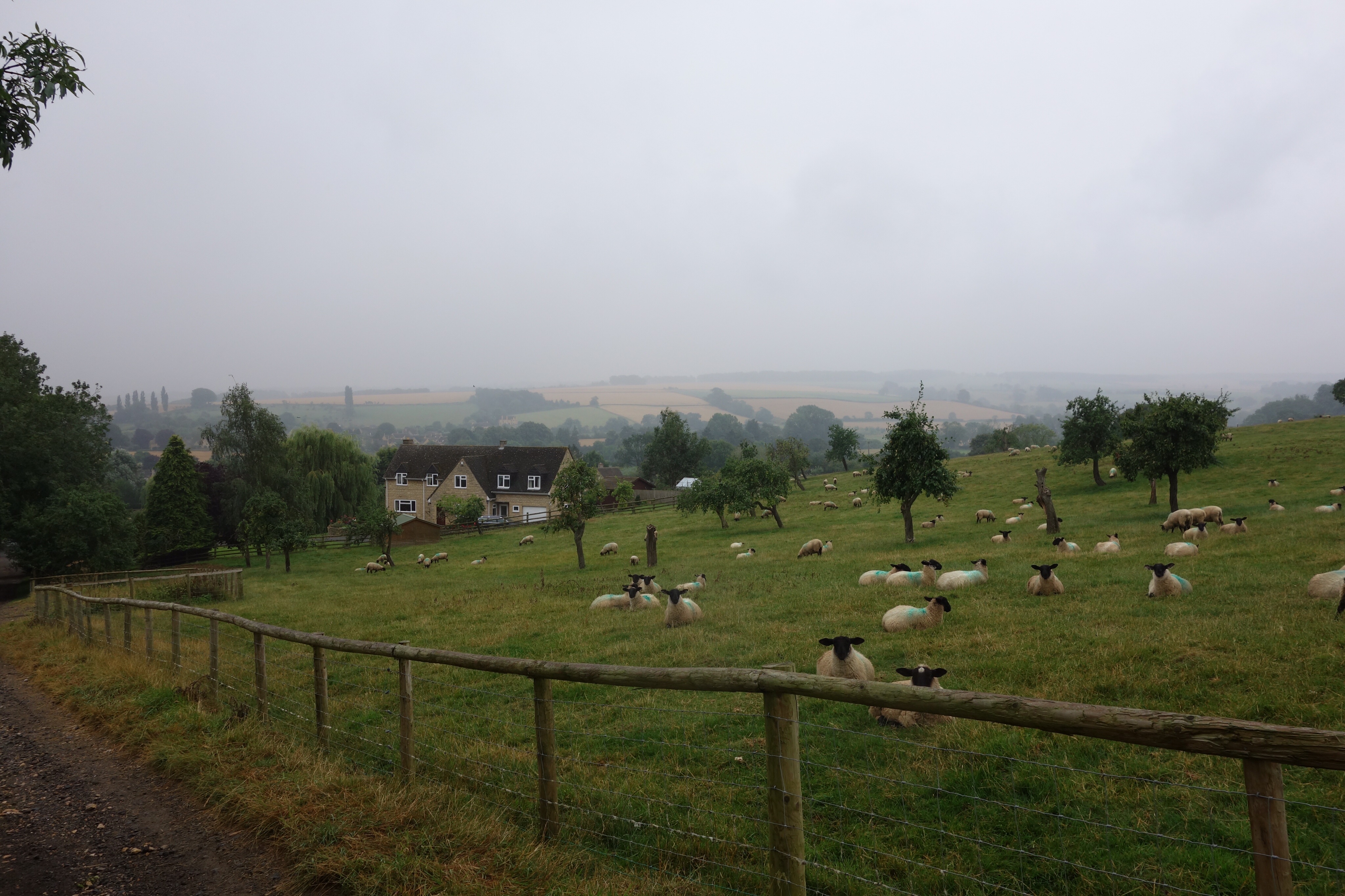
My guidebook took me to a little-used gate into Blenheim Park. I walked past one of the lakes and through a flock of sheep to take a look at a column commemorating the Duke of Marlborough’s career. Note how all the trees have been trimmed by hungry sheep.


Blenheim Palace was in the distance, a pile of yellow Bath Stone.

I walked up to the palace and, on impulse, bought an entry ticket for an extortionate price (I suppose the current duke, the eleventh, has to do what he can to keep the roof on the place). Inside there was a large display about Winston Churchill, who was born here. Did you know he was a painter who made his own greeting cards? Me neither. The architecture and decor was magnificent but also overblown and excessive. I wondered at the size of the estate necessary to pay for such a pile, and in fact much of the land around the palace is owned by the Blenheim Trust. I thought about what it would have been like to be one of the Duke of Marlborough’s tenants and whether his descendants were part of the enclosures of land in the later eighteenth century. The palace is an architectural and cultural monument, but at the same time it is an embodiment of the age’s deep inequality. Who was it that said no artifact of culture can avoid also being an artifact of barbarism? And what will our own age of increasing inequality leave for our descendants?
The formal gardens were, of course, magnificent, especially the rose garden.


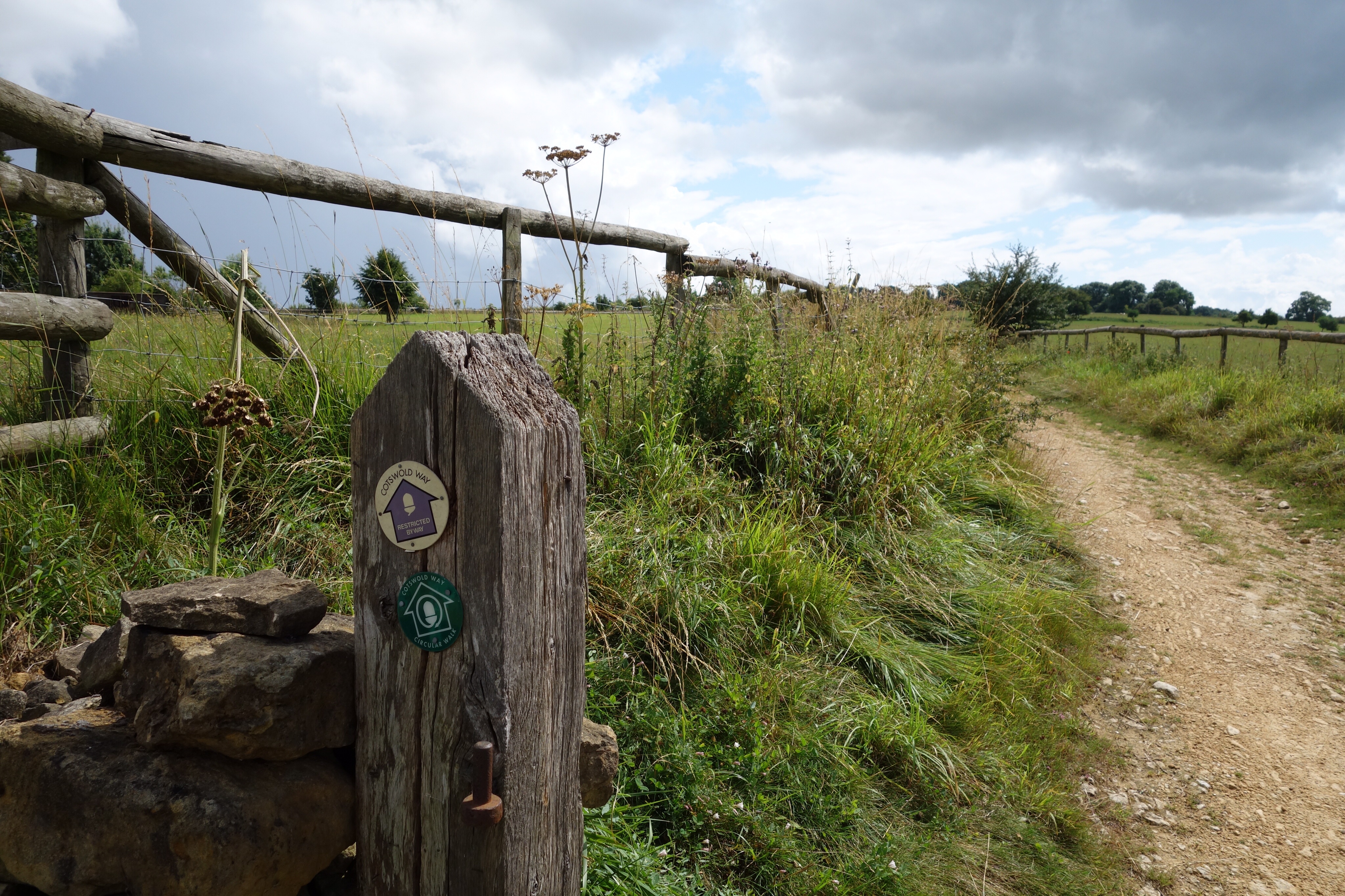
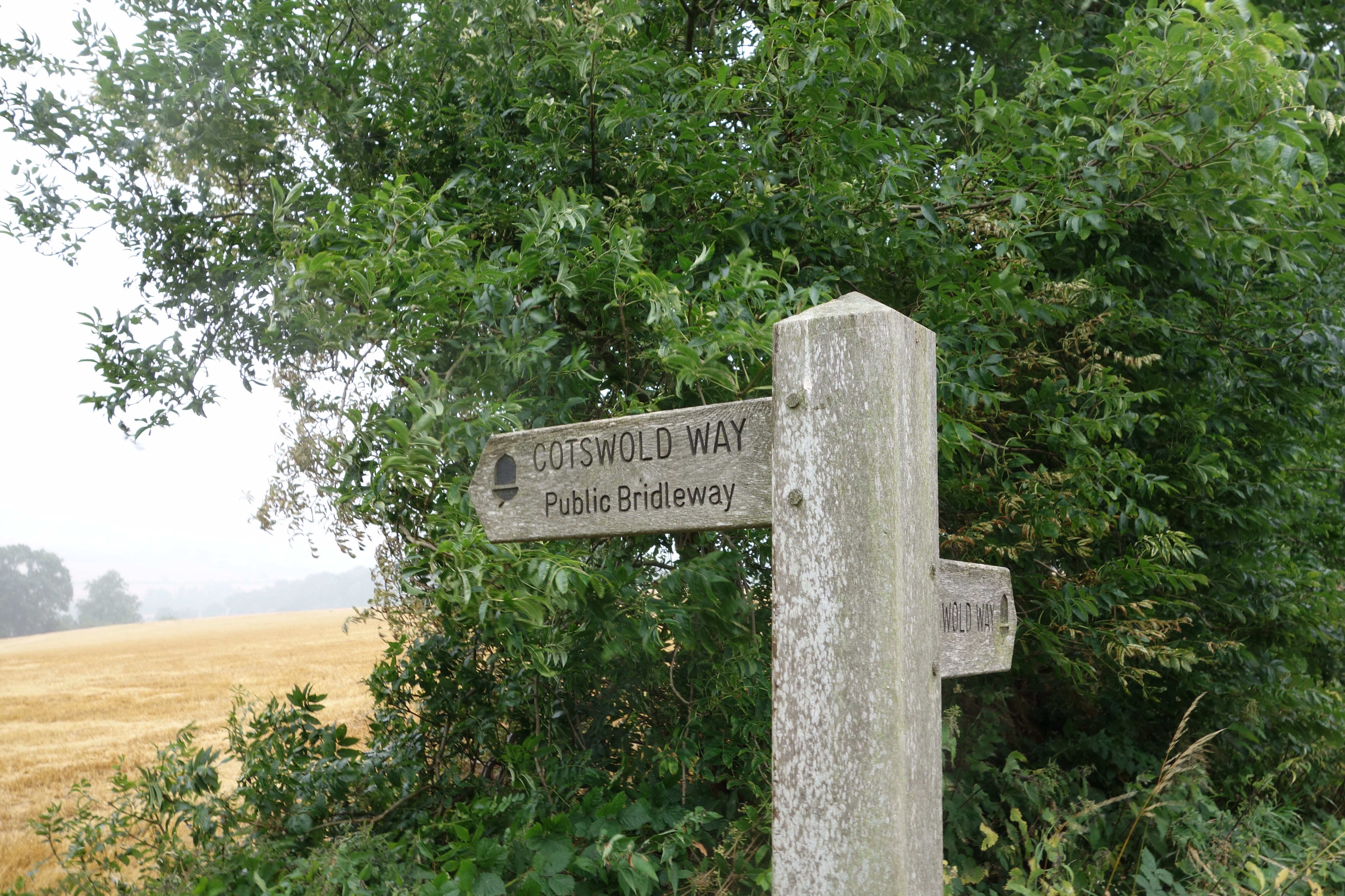
Then it was time to start walking. I found another hidden gate, using my A-to-Z, walked through another village, then found the start of the footpath, a stile and a warning to keep to the right of way. Later there were occasional markers and arrows to let you know you were on the path, although sometimes deciding where the path went was simply guesswork, deciding what looked like a path made by the feet of previous walkers instead of someone or something else.


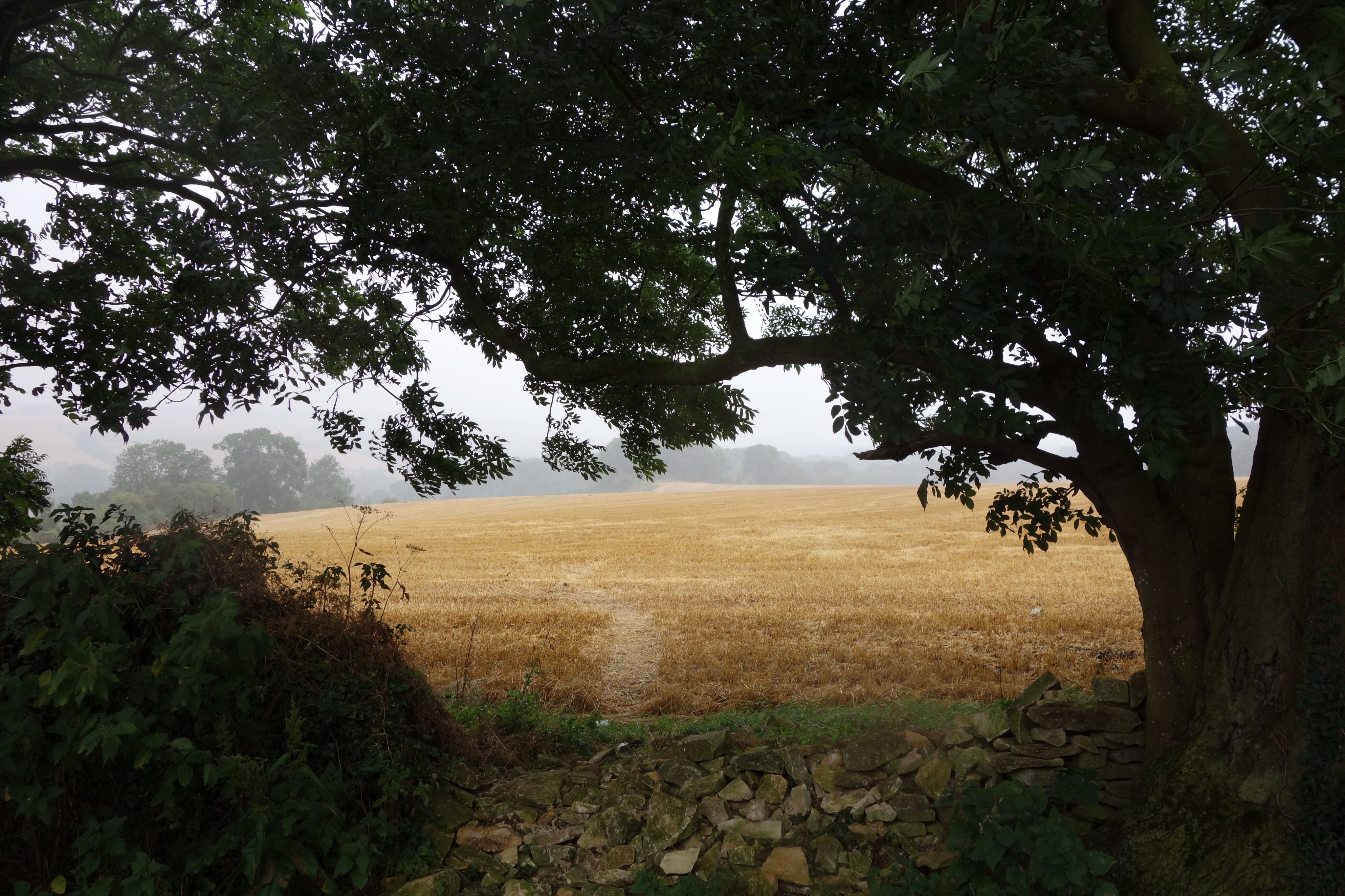
Whether the path was new or old, I couldn’t tell, but walking across pastures and beside wheat fields felt old. How long has there been a right of way like this between the villages of Bladon and Yarnton? And not a formal path, either, not a National Trail or the Camino but a less formal path, apparently used by local villagers. Back home, such paths have been ploughed under or paved over, their traces left only in the names of highways (Louis Riel Trail, Macleod Trail). But these paths are still here and clearly still being used.
Eventually the footpath became a gravel road. I walked through Yarnton and found the footpath again. I was getting closer to the city and the path went under train tracks and a highway before it reached what I thought was the Oxford canal. It wasn’t, and I got lost on a path bordered by shoulder-high nettles. After I crawled under a fallen tree, I decided to retrace my steps. I looked at the map and decided that, somewhere in its tangle of lines, I’d made a wrong turning. When I got to Wolvercote, my legs and arms and hands thrumming from nettle stings, I knew where I was.
My friend Richard likes narrow boats so I took some photos. You can tell which ones are posh holiday craft and which are refuges from the area’s outrageous housing prices.

Then I walked down the towpath to the city, past mallards that were almost completely tame.

When I got back to Oxford, I took another self-guided tour, this time of the northern Victorian suburbs, where I walked past Walter Pater’s house and the home of Sir William Osler, the doctor who figured that the best way to learn what was wrong with a patient was to talk to them about their symptoms. I also passed the red pillar box which the Royal Mail installed for lexicographer James Murray because he received so much mail for his Oxford English Dictionary. Then it was back to the room for a nap before going out for Indian food on the High Street. All together, a successful day of walking and perhaps a foretaste of what we’ll experience in the Cotswolds.